%5B78%5D.jpg)
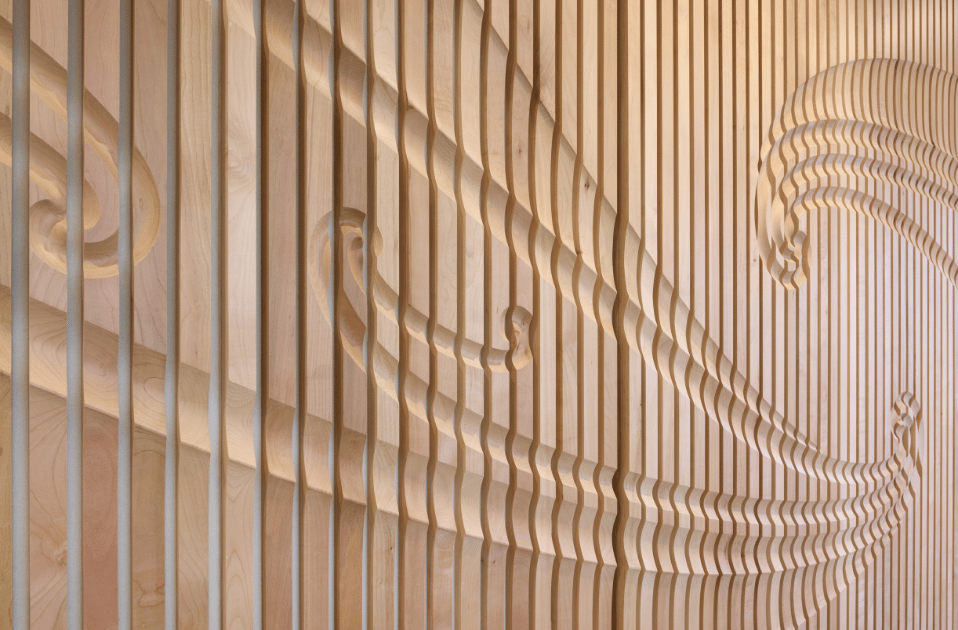
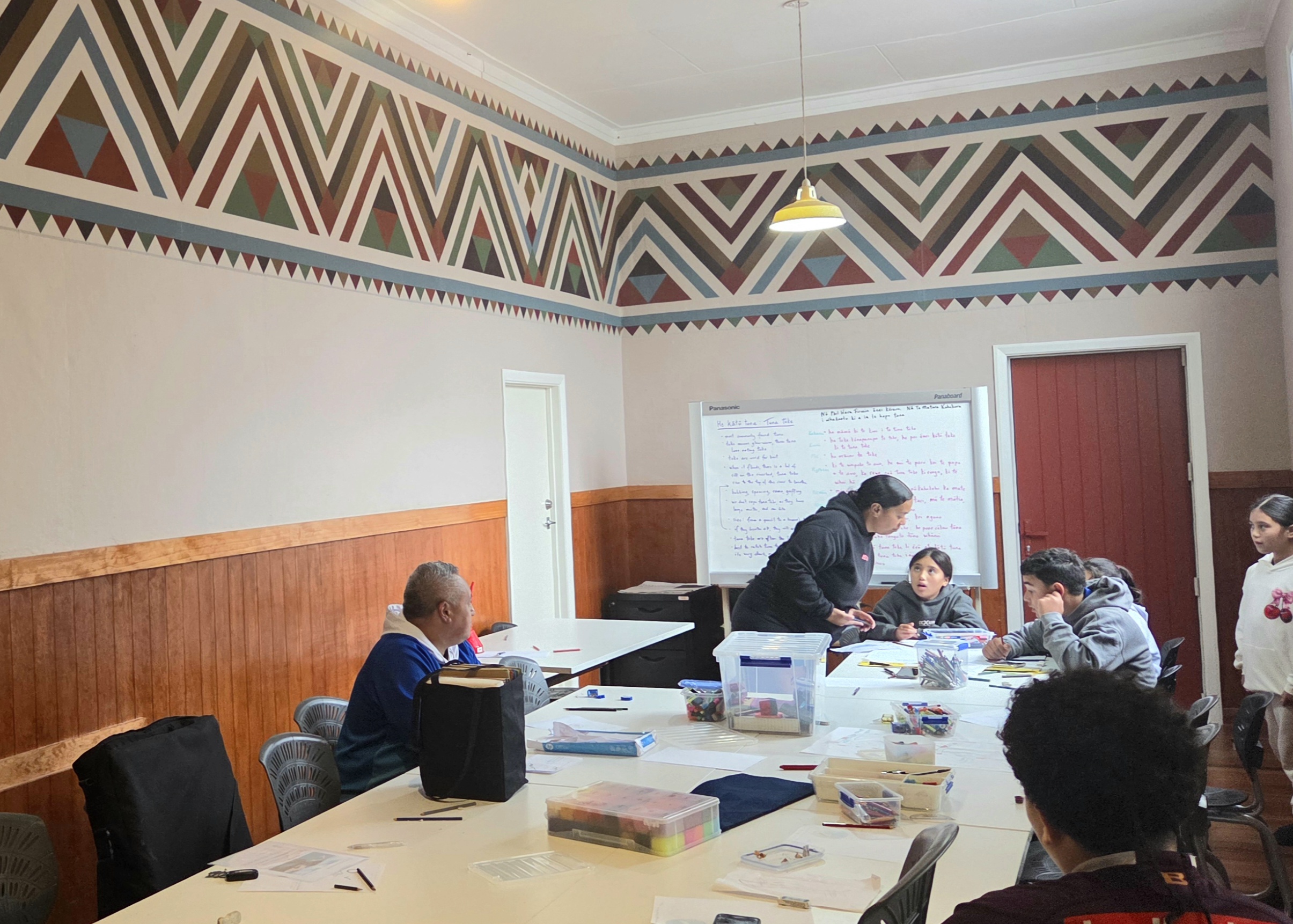
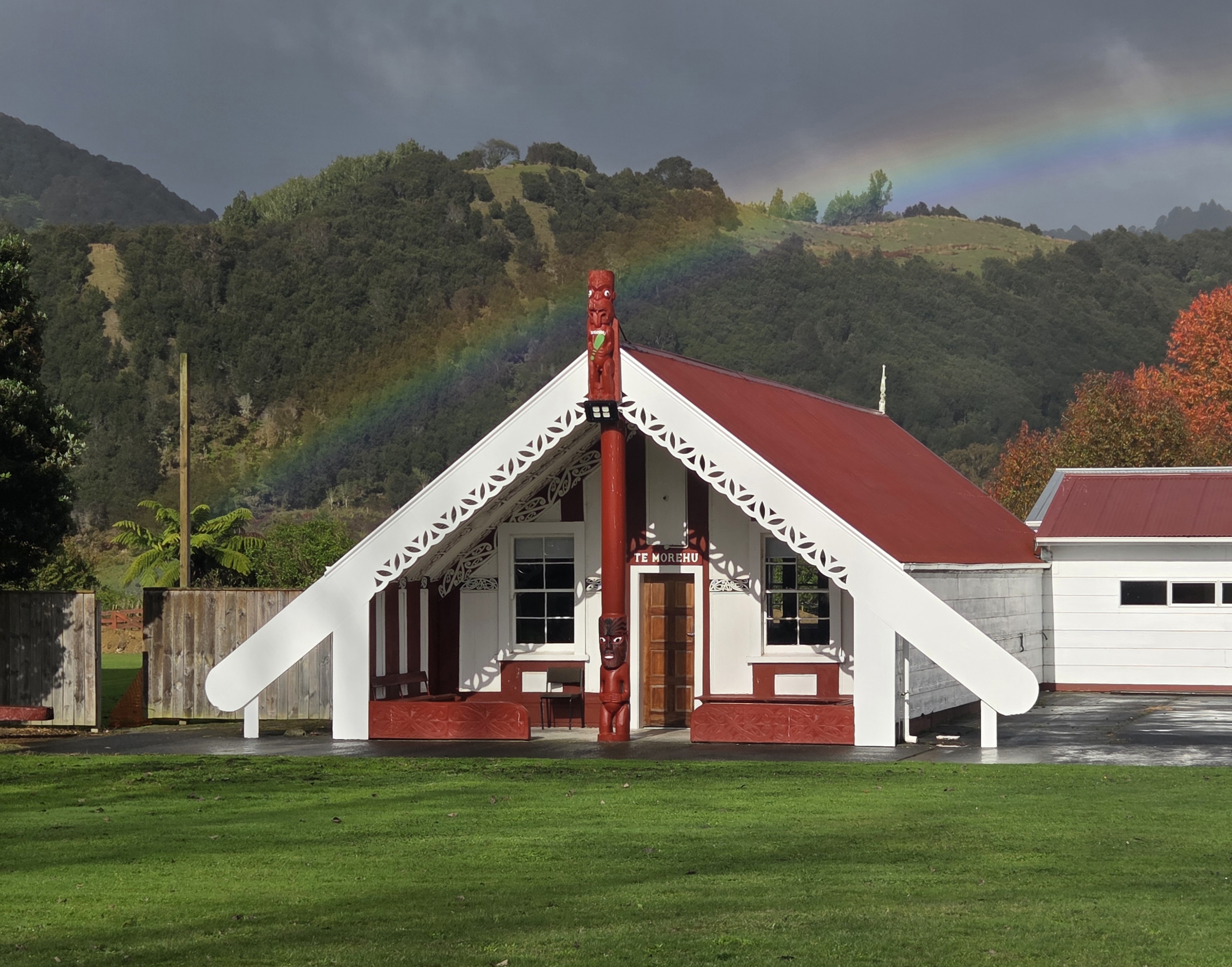
The installation features a custom pattern depicting a kahu paetara design taken directly from Te Morehu wharepuni and Ruaka Hall, both situated at Rānana Marae. The design has transformed the upper walls of the wānanga space (named ‘Toitū Te Whenua’) into a striking visual feature while improving speech clarity and reducing reverberation during learning, hui and community gatherings.
Manufactured using New Zealand strong wool, the Floc panels were selected as a natural acoustic solution that aligned with both the practical needs and identity of the space.
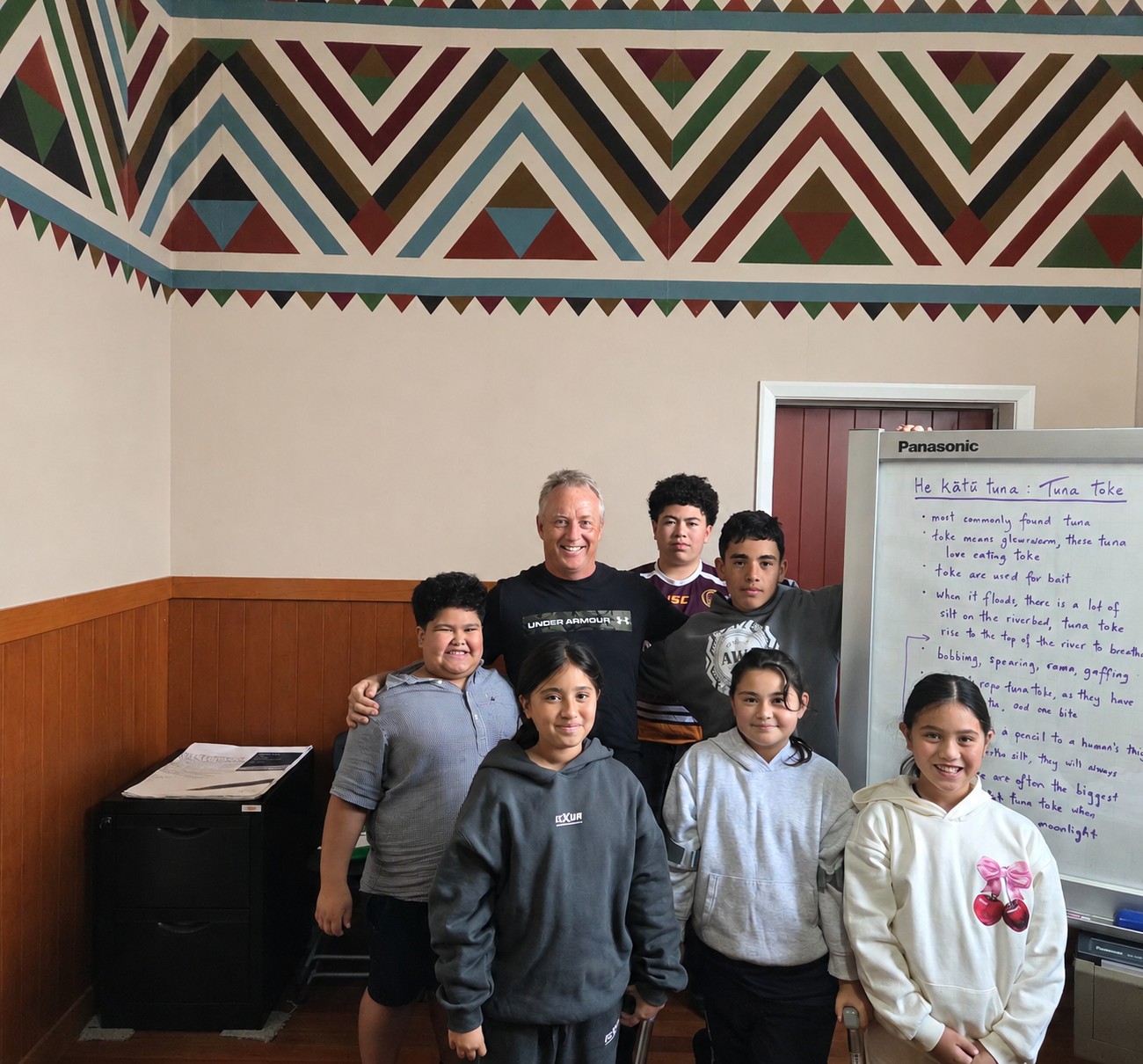
During a recent visit to the marae, Floc’s Tom O’Sullivan met with Rānana Marae Reservation Trust Chairperson, DrRāwiri Tinirau, who shared the wider story behind the design.
Dr Tinirau and members of the marae community were previously involved in presenting a Floc design within the NewZealand Pavilion at Expo 2020 Dubai, where visitors entered a space lined entirely with bespoke New Zealand wool acoustic panels, featuring traditional Māori designs.
With Floc now being taken into the wānangaspace at Rānana Marae, this fresh design has taken on a new role within acommunity space used for education, connection and shared learning around environmental well-being and climate change.
Dr Tinirau describes wool as having along standing connection to many rural Māori communities along the Whanganui River and across Aotearoa, where generations of whānau worked within the shearing and wool industries. In fact, two of the largest Māori land incorporations are based within the wider Whanganui region.
That connection made New Zealand wool a natural fit for the marae project, bringing together acoustic performance, cultural design and material connection within the wānanga space.
Located along the Whanganui River, Rānana Marae is connected to Ngāti Ruaka, Ngāti Hine and Ngāti Rangi hapū of Te Āti Haunui-a-Pāpārangi iwi.
Thank you to Chairperson Dr Rāwiri Tinirau for hosting us.
%5B78%5D.jpg)
An hour up the Whanganui River Road, Rānana Marae has installed bespoke Floc wool acoustic panels within a wānanga space of Ruaka Hall, combining acoustic performance with a design carrying cultural significance.
The installation features a custom pattern depicting a kahu paetara design taken directly from Te Morehu wharepuni and Ruaka Hall, both situated at Rānana Marae. The design has transformed the upper walls of the wānanga space (named ‘Toitū Te Whenua’) into a striking visual feature while improving speech clarity and reducing reverberation during learning, hui and community gatherings.
Manufactured using New Zealand strong wool, the Floc panels were selected as a natural acoustic solution that aligned with both the practical needs and identity of the space.
During a recent visit to the marae, Floc’s Tom O’Sullivan met with Rānana Marae Reservation Trust Chairperson, DrRāwiri Tinirau, who shared the wider story behind the design.
Dr Tinirau and members of the marae community were previously involved in presenting a Floc design within the NewZealand Pavilion at Expo 2020 Dubai, where visitors entered a space lined entirely with bespoke New Zealand wool acoustic panels, featuring traditional Māori designs.
With Floc now being taken into the wānangaspace at Rānana Marae, this fresh design has taken on a new role within acommunity space used for education, connection and shared learning around environmental well-being and climate change.
Dr Tinirau describes wool as having along standing connection to many rural Māori communities along the Whanganui River and across Aotearoa, where generations of whānau worked within the shearing and wool industries. In fact, two of the largest Māori land incorporations are based within the wider Whanganui region.
That connection made New Zealand wool a natural fit for the marae project, bringing together acoustic performance, cultural design and material connection within the wānanga space.
Located along the Whanganui River, Rānana Marae is connected to Ngāti Ruaka, Ngāti Hine and Ngāti Rangi hapū of Te Āti Haunui-a-Pāpārangi iwi.
Thank you to Chairperson Dr Rāwiri Tinirau for hosting us.